🦋 14 Butterfly Life Cycle
🐕 The Happy Pet Foundation Kit
Being a pet parent is incredibly rewarding, but it comes with unique challenges. Instead of wasting money on toys they'll destroy in five minutes, these are the 5 rugged, vet-recommended essentials that physically and mentally enrich your pets' lives every single day.
🔴 KONG Classic Durable Rubber Dog Toy
The absolute gold standard for canine mental stimulation. Stuff this ultra-durable rubber cone with peanut butter and freeze it—it instantly cures separation anxiety, stops destructive chewing out of boredom, and keeps high-energy dogs quietly occupied for hours.
🌸 Catit Flower Water Fountain
Cats notoriously hate stagnant water, which often leads to dangerous dehydration and kidney issues. This constantly flowing, triple-filtered fountain aggressively encourages pets to drink more water while keeping it entirely free of hair and dirt.
✂️ FURminator Undercoat deShedding Tool
Stop vacuuming your house twice a day. This patented grooming tool safely reaches through the topcoat to remove loose hair and undercoat without cutting the skin. Using it just once a week reduces loose pet shedding by up to 90%.
💩 Earth Rated Leak-Proof Dog Poop Bags
Never risk a disaster on a walk again. These incredibly thick, surprisingly pleasant lavender-scented bags are 100% guaranteed leak-proof. They seamlessly tear off the roll without ripping, making the worst part of dog ownership significantly better.
🥣 Outward Hound Slow Feeder Dog Bowl
Dogs that inhale their food are at high risk for bloating and poor digestion. The puzzle ridges in this heavy-duty bowl force your pet to forage for their kibble, dramatically slowing their eating pace while turning dinner time into a healthy brain game.
Ever wonder what’s really going on behind the scenes with those gorgeous winged beauties flitting around your garden? We’re talking about butterflies, obviously. It’s not just a cute little flutter and bam, they’re born. Nope, their journey is a whole dramatic saga, full of munching, chilling, and some serious glow-up energy. Buckle up, friend, because we’re diving deep into the ultimate transformation story. You won’t believe the wild ride they take.
1. The Tiny Beginning
Every epic tale starts somewhere small, right? For butterflies, it’s usually a minuscule, often oval-shaped egg. Mama butterfly doesn’t just drop it anywhere; she carefully places it on a specific “host plant.” Talk about strategic parenting.
These eggs are super tiny, sometimes ribbed or spiky, and totally underrated. They might look like little dewdrops or even plant debris, but they hold all the potential. Pro tip: If you want to spot them, get up close and personal with the leaves of plants like milkweed or dill. You’ll feel like a nature detective.
This stage is brief but absolutely crucial, setting the stage for everything that follows.
2. Host Plant Home
So, we mentioned the host plant. This isn’t just a random leafy perch; it’s the exclusive dining room for the future caterpillar. Each butterfly species has its favorites, and they are incredibly particular about where they lay their eggs.
Think of it like a five-star restaurant reservation for their offspring. The plant provides the perfect camouflage and, more importantly, the exact nutrients the soon-to-be-hatching larva needs. Pro tip: Planting native host plants is like rolling out the red carpet for local butterflies. They appreciate the effort.
Without the right plant, the cycle simply can’t begin, making this choice a matter of survival.
3. Hatching Day Drama
After a few days or weeks, depending on the species and conditions, the egg hatches. Out pops a tiny, hungry larva, which we affectionately call a caterpillar. It’s a grand entrance, really.
The first thing this little guy usually does? Eats its own eggshell. Talk about a zero-waste start to life. It’s a quick, protein-packed snack to kickstart its growth spurt. Pro tip: Don’t expect a big fanfare; they’re usually pretty discreet about their grand unveiling.
This moment signifies the end of the egg stage and the beginning of a whole new munching adventure.
4. Caterpillar Chow Down
Once hatched, the caterpillar has one main mission: eat, eat, eat. Seriously, it’s their full-time job. They’re like tiny, adorable eating machines, constantly devouring the leaves of their host plant.
This intense feeding fuels their rapid growth, making them plump and strong for the next stage. They grow exponentially, sometimes increasing their body mass by thousands of times. Pro tip: If your plant suddenly looks a bit chewed up, you might have some hungry tenants in residence. Embrace the munching.
Their voracious appetite is a critical part of accumulating energy for the incredible transformation ahead.
5. Molting Madness
Caterpillars wear their skeletons on the outside, which is pretty cool, but also means they can’t just stretch to grow. Instead, they molt, shedding their too-tight skin several times. Each stage between molts is called an “instar.”
They basically wiggle out of their old skin, revealing a new, larger one underneath. It’s like upgrading your wardrobe multiple times a day. Pro tip: You might even find their discarded “head capsules” nearby, which look like tiny alien helmets. Collect them if you’re feeling adventurous.
This process of shedding allows them to expand and continue their growth journey without constraint.
6. The Voracious Appetite
Let’s double down on that eating thing because it’s truly remarkable. A caterpillar’s growth rate is insane; some monarch caterpillars can increase their size by 2,000 times in just two weeks. We’re talking serious dedication to dining.
All this eating isn’t just for kicks; it’s to store up enough energy and nutrients for the incredibly demanding pupa stage. They’re basically pre-loading for a very long nap. Pro tip: If you’re raising caterpillars, be prepared to resupply fresh host plant leaves constantly. They’re not messing around.
Their incredible consumption powers the entire cycle, proving that sometimes, more is definitely more.
7. Finding the Perfect Perch
Before the big transformation, the caterpillar gets a little antsy. It stops eating and starts looking for a safe, secluded spot to pupate. This usually involves a bit of a wanderlust phase.
They might climb up a stem, find a hidden spot under a leaf, or even travel a short distance away from their host plant. It’s all about finding that perfect, undisturbed location for their grand metamorphosis. Pro tip: If your caterpillar suddenly goes rogue, don’t panic. It’s just scouting for its zen zone.
This careful selection of a pupation site is vital for their security during the vulnerable chrysalis stage.
8. Chrysalis Creation
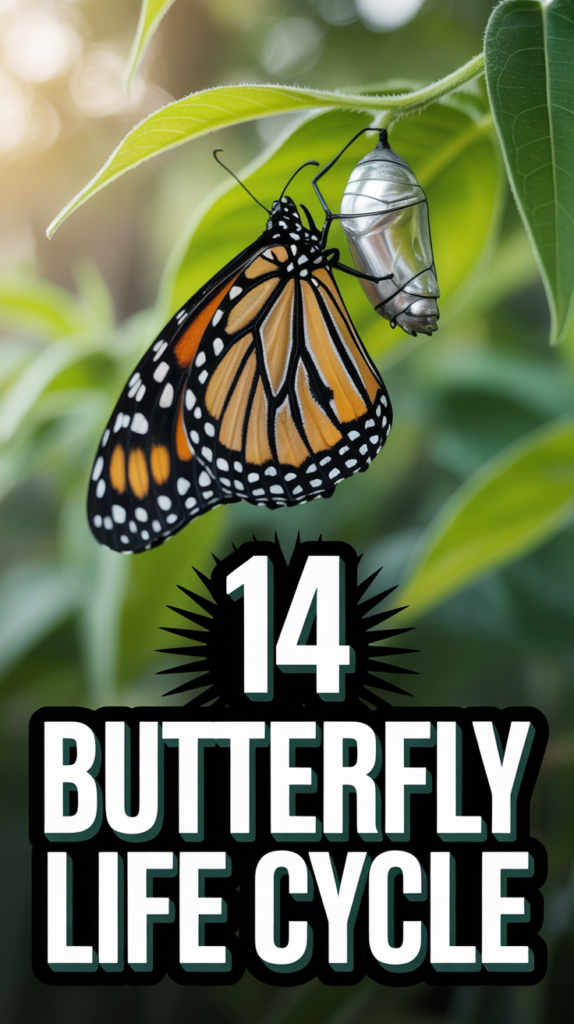
This is where the magic really ramps up. Once settled, the caterpillar sheds its skin one last time, but instead of revealing a bigger caterpillar, it transforms into a chrysalis (for butterflies, not a cocoon, which is for moths). It’s usually a beautiful, hardened casing.
The chrysalis varies wildly in appearance, from shiny green jewels to dull brown twigs, depending on the species. It often hangs upside down, securely attached by a silk pad. Pro tip: Resist the urge to poke it. It’s a delicate process inside, and they need their space.
The chrysalis serves as a protective chamber for the most profound changes to occur.
9. The Great Metamorphosis
Inside that seemingly dormant chrysalis, things are absolutely wild. The caterpillar’s body basically dissolves into a nutrient-rich soup, and then, from that cellular goo, the adult butterfly’s structures begin to form. We’re talking a complete cellular rearrangement.
It’s one of nature’s most mind-blowing biological processes, a total rebirth. Imagine going to sleep as one thing and waking up as something entirely different. Pro tip: While you can’t see the action, know that tiny wing buds, antennae, and legs are all taking shape. It’s super cool, trust us.
This incredible transformation is the heart of the butterfly’s life cycle, a testament to nature’s ingenuity.
10. Eclosion Event
After days or weeks, the chrysalis becomes transparent, and you can often see the butterfly’s wing patterns inside. Then, the chrysalis splits open, and the fully formed adult butterfly emerges. This is called “eclosion.”
It’s a bit of a struggle, and they often look a little crumpled at first. They hang upside down to allow gravity to help pump fluid into their wings, expanding them. Pro tip: This is a truly special moment if you’re lucky enough to witness it. Keep a respectful distance and just marvel.
The emergence marks the end of the pupa stage and the beginning of their winged existence.
11. First Flight Prep
Once out of the chrysalis, the butterfly isn’t immediately ready for takeoff. It needs time for its delicate wings to fully expand and harden, and for its body to dry. They often hang quietly for several hours, sometimes even a full day, as they prepare for flight.
They gently unfurl their proboscis (their straw-like mouthpart) and curl it back up, getting it ready for nectar sips. Pro tip: Do not touch their wings during this time, or ever. The scales are incredibly delicate and can be easily damaged, hindering their ability to fly.
This crucial drying and strengthening period ensures they are robust enough for their aerial adventures.
12. Adult Adventures
The adult butterfly stage is all about reproduction. Their main goals are to find a mate and lay eggs, thus continuing the cycle. They spend their days flitting from flower to flower, sipping nectar for energy.
While we admire their beauty, they’re on a mission, sometimes migrating thousands of miles. Pro tip: Different species have different flight patterns and behaviors. Observing them can tell you a lot about their world.
This final stage is short but incredibly significant, ensuring the survival of their species.
13. Nectar Nosh
Unlike their caterpillar counterparts who chomp on leaves, adult butterflies are all about that liquid diet. They use their long, coiled proboscis to sip nectar from flowers, which provides the energy they need for flying and mating.
They also contribute to pollination as they move from flower to flower, which is a pretty sweet deal for everyone involved. Pro tip: Plant a variety of nectar-rich flowers in your garden to attract and support these vital pollinators. They’ll thank you.
Their feeding habits are crucial for both their survival and the health of our ecosystems.
14. The Cycle Continues
Finally, after mating and fueling up, the female butterfly lays her eggs, often on the very same type of host plant that supported her own caterpillar days. And just like that, the incredible butterfly life cycle begins anew.
It’s a continuous, never-ending dance of transformation, growth, and rebirth. Each generation ensures the next, a testament to nature’s enduring design. Pro tip: Remember, every butterfly you see represents this entire, complex journey. Give them a silent cheer.
This cyclical nature is what makes the butterfly’s story so endlessly fascinating and vital to our world.
🐾 The Ultimate Pet Care & Cleanup Kit
We love our animals, but we don't love the messes they make. From muddy paws to unexpected accidents, these are the 5 ultimate cleanup and home-care tools you need to keep your house smelling fresh and looking spotless despite the chaos.
🛋️ ChomChom Pet Hair Remover Roller
Throw away your sticky tape lint rollers. By rapidly rolling this tool back and forth, it generates an electrostatic charge that magically pulls deeply embedded dog and cat hair out of couches, beds, and carpets. It's completely reusable and requires no batteries or tape.
🧼 BISSELL Little Green Portable Carpet Cleaner
The ultimate lifesaver for pet owners. Whether it's muddy paw prints, spilled wine, or an unexpected puppy accident, this portable spot-cleaner aggressively scrubs and vacuums stains straight out of your carpets and delicate upholstery before they can set in.
🧪 Rocco & Roxie Enzymatic Stain Eliminator
Regular cleaners just mask smells. This professional-strength bio-enzymatic formula physically eats away deep-set ammonia crystals from pet urine, completely destroying the stain and the odor forever so your pet won't be tempted to mark the same spot again.
🍊 Angry Orange Pet Odor Eliminator
Derived from the oil of custom cold-pressed orange peels, this commercial-grade deodorizer doesn't just cover up 'wet dog' smells or litter box odors—it utterly neutralizes them. A tiny spray leaves your entire home smelling like a fresh citrus grove.
🚫 Seresto 8-Month Flea & Tick Collar
The mess-free alternative to greasy monthly topical treatments. This vet-recommended collar continuously releases low concentrations of active ingredients for eight straight months, killing and repelling fleas and ticks before they can infest your house.
Conclusion
So, there you have it, folks. The butterfly life cycle isn’t just a cute little diagram from grade school; it’s a full-blown, four-act drama packed with eating, growing, dissolving, and emerging. It’s a masterclass in transformation, proving that sometimes, the most beautiful things come from the most radical changes.
Next time you spot a butterfly, give it a knowing nod. You now understand the intense journey it undertook to grace your presence. It’s a reminder that even the tiniest creatures hold the most extraordinary stories. Go forth and appreciate the magic!