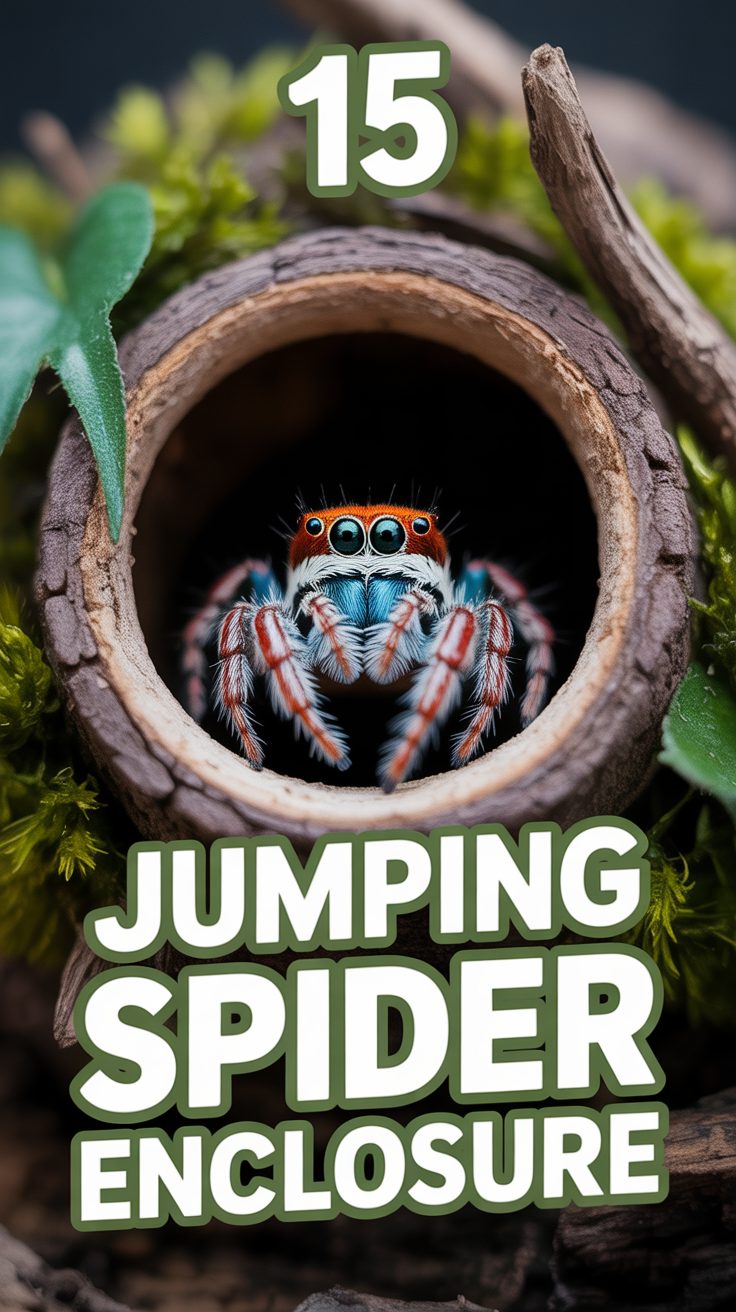
🕷️ 15 Jumping Spider Enclosure
Alright, let’s talk about setting up a pad for your itsy-bitsy, eight-legged roommate. Forget those flimsy critter keepers; your new bestie deserves a five-star, luxury suite. We’re not just housing a spider; we’re curating a tiny, vertical jungle for a tiny, vertical hunter. Get ready to make your jumping spider the envy of all its arthropod pals.
1. The Vertical Vibe
Your jumper is a natural-born climber, not a ground-dweller. Think skyscraper, not ranch house. An enclosure that’s taller than it is wide gives them ample space to explore upwards, build hammocks high, and survey their domain. Pro tip: Always aim for at least double the height of the enclosure’s width for optimal climbing real estate. This vertical layout truly lets them live their best, high-flying life.
2. Top-Opening Access
Seriously, this is a game-changer. Jumping spiders often build their silk hammocks at the top of their enclosure. A top-opening lid means you won’t accidentally smoosh their cozy bedroom every time you need to mist or feed. It’s all about respecting their personal space, even if that space is just a few inches from the ceiling.
3. Proper Ventilation
Stagnant air is a no-go zone for these little guys. You need good airflow to prevent mold and ensure a healthy environment. Look for enclosures with plenty of tiny holes on multiple sides, not just a few big ones. Good cross-ventilation keeps things fresh and prevents respiratory issues for your tiny friend.
4. Secure Latch System
These little acrobats are escape artists in training. A flimsy lid is just an open invitation for an adventure you didn’t sign up for. Make sure your enclosure has a tight, secure latch that even the most determined jumper can’t wiggle out of. You don’t want to play hide-and-seek with a spider in your living room.
5. Substrate Smarts
Forget fancy bedding; a thin layer of coconut fiber or sphagnum moss works wonders. It helps hold humidity without getting soggy and provides a soft landing if they ever take an unexpected tumble. A little substrate goes a long way, offering both comfort and practical moisture retention.
6. Climbing Branches
Natural branches, cleaned and sterilized, are a must-have. They provide excellent climbing surfaces and anchor points for those intricate silk hammocks. Choose branches with interesting textures and varying thicknesses to give them a dynamic climbing experience.
7. Faux Foliage Fun
Artificial plants are your friend here. They’re easy to clean, don’t wilt, and provide crucial hiding spots and climbing opportunities. Think small, leafy plants that offer plenty of surface area for exploration and ambush points. They make the enclosure look lush and give your spider a sense of security.
8. Silk Hammock Anchors
Beyond branches, think about things like small plastic suction cups, tiny plastic chains, or even a piece of cork bark glued to the side. These give your spider extra spots to anchor their silk and build those all-important molting or egg sac hammocks. The more anchor points, the more creative they can get with their architecture.
9. Water Dish Wisdom
A tiny, shallow water dish or even just misting the sides of the enclosure daily is key. Jumping spiders drink water droplets. A bottle cap or a small, flat pebble with a few drops of water is perfect. Pro tip: Avoid deep dishes; they can drown in those.
10. Feeding Ledge Luxury
A small magnetic feeding ledge or a piece of cork bark attached to the side provides a dedicated spot for prey. This keeps food off the substrate and makes it easier for your spider to find its meal. Plus, it looks super chic and organized.
11. Hiding Hut Haven
Every spider needs a safe space to retreat and feel secure. A small, hollow piece of cork bark, a tiny plastic cave, or even a small, overturned plastic cup works perfectly. It’s their personal panic room for when they need a moment alone.
12. Temperature Control
Most jumping spiders do great at comfortable room temperature, around 70-78°F (21-25°C). Avoid direct sunlight or drafty areas. A consistent, cozy temperature keeps them active and healthy without needing fancy heating equipment.
13. Humidity Heroes
A quick misting once a day, maybe twice in drier climates, is usually enough. You want droplets on the sides of the enclosure, not a swampy mess. Use a fine mist sprayer to create those perfect little beads of water they love to drink.
14. Lighting Love
Ambient room light is perfectly fine; they don’t need special UV lamps. Just make sure they have a clear day-night cycle. Avoid placing them directly under harsh lights, as this can stress them out. Natural light, without direct sun, makes for a happy spider.
15. The “Less Is More” Rule
Don’t overcrowd the enclosure with too many decorations. Your spider needs space to jump and hunt. A few well-placed items are far better than a cluttered mess. Keep it functional and aesthetically pleasing for both you and your tiny resident.
Conclusion
So there you have it, 15 ways to elevate your jumping spider’s living situation from basic to bougie. Remember, a happy spider is an active, curious spider, and a well-designed enclosure is the first step to unlocking their full, adorable potential. Go forth and create a tiny paradise; your eight-legged pal will thank you!